Keynote Speakers
CMAME2025 Keynote Speakers
![]() |
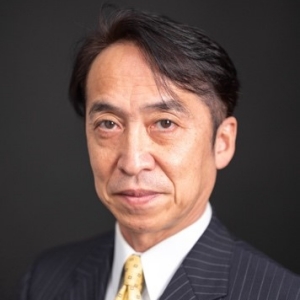
Prof. Makoto IwasakiVice President of Nagoya Institute of Technology, JapanIEEE FELLOW, IEE JAPAN FELLOW |
Biography: Makoto Iwasaki received his B.S., M.S., and Dr. Eng. degrees in Electrical and Computer Engineering from Nagoya Institute of Technology (NIT), Japan, in 1986, 1988, and 1991, respectively. He is currently Vice President of NIT, responsible for international affairs, and a Professor in the Department of Electrical and Mechanical Engineering.
As an active contributor to the IEEE Industrial Electronics Society (IES), he has served in various leadership roles, including Chair of the IES Fellow Evaluation Committee (2022–2023), Co-Editor-in-Chief of the IEEE Transactions on Industrial Electronics (2016–2022), and Vice President for Planning and Development (2018–2021), among others. He was elevated to IEEE Fellow in 2015 for his "contributions to fast and precise positioning in motion controller design." He is also a Fellow of the Institute of Electrical Engineers of Japan (IEEJ) and a member of the Science Council of Japan.
Dr. Iwasaki has received numerous prestigious academic, foundation, and government awards, including the Best Paper and Technical Awards from IEEJ, the Nagamori Award, the Ichimura Prize, and the Commendation for Science and Technology by the Japanese Minister of Education. He has also been recognized in the World’s Top 2% Scientists 2024 by Stanford University and Elsevier.
His current research interests focus on the application of advanced control theories to linear and nonlinear modeling, precision positioning, and intelligent motion control, through extensive collaboration with industry.
Title of Speech: Practical Motion Controller Design for Mechatronic Systems Considering Global Environmental Issues
Abstract: “Motion Control” is one of practical academic disciplines on the basis of control theories, and has been extensively applied to actual “Mechatronic Systems” in various industrial fields. For example, fast-response and high-precision motion control should be indispensable in a wide variety of high performance mechatronic systems including micro and/or nano scale motion, such as data storage devices, machine tools, manufacturing tools for electronics components, and industrial robots, from the standpoints of high productivity, high quality of products, and total cost reduction. In those applications, the required specifications in the motion performance, e.g. response/settling time, trajectory/settling accuracy, etc., should be sufficiently achieved, in addition to the robust/adaptive capabilities against disturbances, uncertainties, and variations in mechanisms.
Recent technological trends, on the other hand, are broadening the motion control applications to effectively present the countermeasures of the industrial high performances as well as the global environmental issues against, such as, natural disasters, global warming, the Sustainable Development Goals (SDGs), etc. The keynote speech, therefore, explores how motion control technologies contribute to improving mechatronic systems while simultaneously providing practical solutions to pressing environmental issues. Specifically, the talk highlights research and development efforts aimed at achieving high-performance motion control in environmentally conscious applications. Case studies will be presented, including hydraulic actuator-driven earthquake simulators and Galvano scanner-driven laser marking systems for bottle packaging, to illustrate practical controller design methodologies and their real-world impact.
![]() |
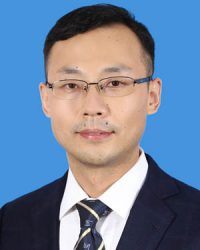
Prof. Dennis LeungUniversity of Hong Kong, Hong Kong, ChinaIMechE FELLOW, HKIE FELLOW |
Biography: Professor Dennis Y.C. Leung received his PhD in fluid dynamics in 1988 from the Department of Mechanical Engineering at the University of Hong Kong (HKU). After working in the power industry for 5 years, Prof. Leung joined HKU Mechanical Engineering Department in 1993. He became a full professor in 2007 and head of department during 2020 to 2023. Prof. Leung specializes in environmental pollution control and renewable & clean energy. He has published more than 600 articles in this area including 370+ peer reviewed top SCI journal papers. His current h-index is 100 with citations over 50K. He is one of the top 1% highly cited scientists in the world in energy field since 2010 (Essential Science Indicators) and named as a Highly Cited Researcher by Clarivate Analytics for six consecutive years from 2017 to 2022. Prof. Leung has delivered more than 80 keynote and invited lectures in numerous international conferences.
Professor Leung is a chartered engineer, a fellow of the IMechE, HKIE and Energy Institute. and Past Chairman of the Institute of Energy (HK Branch). He currently serves as an editorial board member for a number of journals including Applied Energy, Energy Conversion and Management, Applied Sciences, and Progress in Energy. Prof. Leung also serves as a board member of the Hong Kong Institution of Science, chairman and member of several HKSAR government’s committees and appeal board panels related to sustainable energy and environment. Prof. Leung received the Environmental Champion Award (Hong Kong) in 2008 and Advanced Materials Laureate from the International Association of Advanced Materials in 2024.
Title of Speech: Nano-Photocatalytic technology for effective antifouling in marine environment for energy performance improvement and environmental protection
Abstract: Fouling is a common challenge in marine environments, where microorganisms such as barnacles and tubeworms accumulate and thrive on submerged surfaces. To combat fouling in underwater settings, antifouling coatings are often applied to boats, yachts, and seawater cooling systems. However, the effectiveness of these coatings may vary and many of them contain toxic materials thus contaminating our water environment. This presentation will delve into the materials commonly used for fouling prevention, highlighting their strengths and weaknesses. Additionally, a cutting-edge nano-sized photocatalytic coating will be introduced as a promising solution for inhibiting the growth of microorganisms on yacht hulls and seawater gates. The mechanism behind this innovative coating will be explored in detail. By leveraging these advanced materials, the frequency of removing accumulated microorganisms can be reduced, leading to lower maintenance expenses and improved fuel efficiency. The presentation will also touch upon the potential applications of photocatalytic coatings in managing fouling on various marine structures beyond boats and cooling systems.
2025 the